Showing posts with label Ukraine. Show all posts

15 August 2011

CRF: Ukraine

"CRF" is not a crime show you've never heard of, it stands for "Cutting Room Floor." Below are some of our favorite pics that never made the blog. We figured we'd reminisce a little while we're home for a visit. (Back in Europe August 16th).
We were in Ukraine during the frustrating throes of springtime. The weather was warmer than it had been in the countries before, but not by much. The skies were bluer occasionally, but still threatening. We drove on muddy, washed out backroads in the Carpathians, up into deep snowpack and back down to the dry plains of the east. It was a beautiful and vast country, with scuffed edges and flashes of brilliant color.
The Ukrainian flag has two fields - a strip of gold beneath another of blue. It is said to be based on the colors of wheat under a cloudless sky, the simplicity evoking the great flatlands at the country's heart.
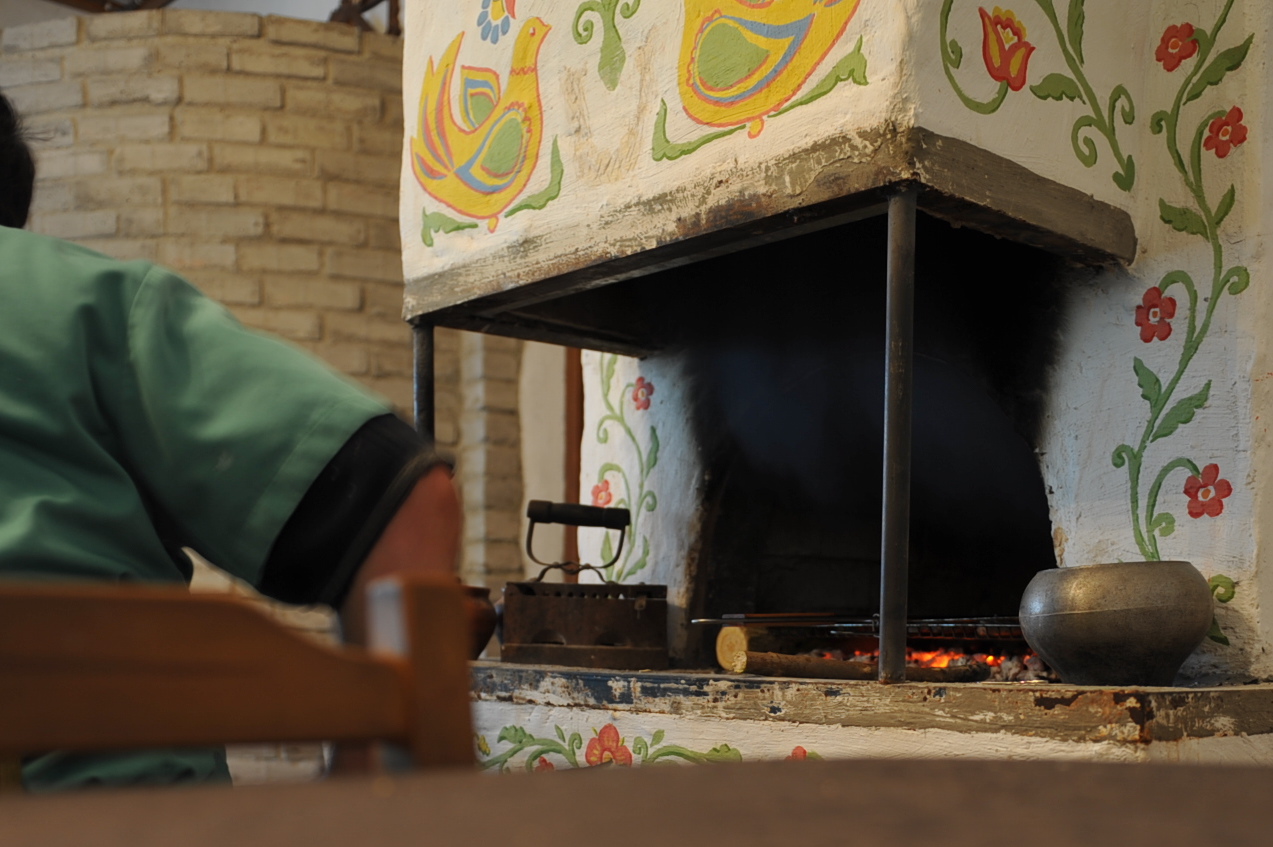
Near the fortress of Khotyn we had cups of bitter coffee in this cafe (and home). It was unheated, so we sat in our bundling layers and held our cups in mittened hands. The woman who sold us the coffee had a few blankets and embroidered shirts for sale. Her cat sat on our table and watched us.
A kind of shabby elegance mixed with soviet functionality gave Ukraine a beautiful aesthetic. Layers of history seemed to have decayed into a uniform state where ancient and new seemed equally rusty and appealing.
It felt like the broken and fertile landscape of spring, with chimneys and old antennae rising up from chipped paint like last fall's brown stalks from a bed of dead leaves. We felt that all of the country had just been released from winter's snow and was set to begin blooming.
In Ivano-Frankivsk, a city we liked quite a bit, we poked our cameras through the fence that surrounded this almost barren market. Dark figures moved amongst the flapping tarps of the stands, carrying things from place to place.
In the lower folds of the Carpathians, houses (and churches) were decorated with elaborate tinwork. It seemed that the style and pattern changed from valley to valley.
A book market in Lviv, were the vendors splayed their wares out beneath a statue of a man holding a huge tome. It was too cold to leaf through any of the books (or bother struggling with the cyrillic).
In the Carpathians we stayed at a ski area, but didn't ski. In a nearby town, another ski area was set up - people rented equipment out of the back of old army trucks.
We laughed when we saw this picture because we remembered laughing at the time - the chocolate bars arranged along the bottom of this display were bootleg versions of popular brands, their wrappers just slightly different from the real thing. It struck us as funny at the time; Ukraine is a country so committed to thriftiness and practicality that even the price of a bar of chocolate is worth undercutting.

17 February 2011

Castle Hunting: Khotyn

When we were in Kamyanets-Podilsky and Kolomyia, we were told that Khotyn castle was THE place to go in the region. After having such a great time taking pictures of the beautiful Kamyanets-Podilsky fortress, we were skeptical and curious about this other place. It turned out to be more magnificent, but less photogenic, than our first Ukrainian fort. Sitting on the banks of the Dnistr river, it's walls towering over the valley, it was quite a sight. Unfortunately, the day was grim and the light was difficult. We shivered our way through the light snow, climbing on frightening paths around the surrounding rocks.
The building is massive, with towers that stand over 120 feet high and walls that reach to almost 100 feet. A wooden fort (which was partly reconstructed in stone during the 13th century) stood on the site before the current castle, but the region was fairly remote and not often threatened by invasion. In the 15th century, though, the area began to become more strategically important, with Polish and Ottoman armies encroaching upon the Moldavian principality. The waywode Stephen III ("Stephen the Great," apparently) erected three large scale, modern castles in the region to defend his land's independence. The largest of these three was Khotyn, which was built over a period of seven months during 1463.
The courtyard was empty except for a bunch of scruffy dogs that barked at each other and us. Most of the doors were locked, and we were too cold to stick around for long. The little building in the center is the well house.
There are outer walls that protect the castle's flank, running along a high slope for about a mile. We spotted one other couple walking along them, but never got within shouting distance of them. The snow made the recently burnt grass very slippery, and we had to do some creative scooting to make our way down some of the slopes.
The rear castle wall (away from the river) is cambered outward quite steeply, which looks a little scary but is intentional. There is an interesting red pattern laid into the stonework, apparently in an "averting" design that is called "the holy Tetractis." The large wet spot on the castle wall has existed almost from the time that it was built, and has never been fully explained. There is an ancient legend that tells of a local girl who was built into the wall alive - her tears seep out continuously, creating the mark. People now believe that an interior ditch (the castle yard is much higher than ground level) drains at that point, accounting for the moisture.
As we were leaving, a big tour group came clomping down the hill. We stopped at a little, rundown building near the gates for a cup of coffee, served to us by two old women bundled in bright wool. The sun was beginning to poke through the clouds, but the wind, people and chill dissuaded us from going back for better photos.

Steeped in History and, also, Steep

Traveling around Ukraine, it's easy to get caught up in its dramatic modern history, to look for what is Soviet or un-Soviet about it, to see the country as new or young, having only gained its independence within my lifetime. That's when a trip to Kamyanets-Podilsky comes in handy. It's a city that oozes with reminders that Ukraine's history has been interesting and dramatic for centuries, not just decades.
Mentions of the city date back to 1062 and was a town in the Kieven Rus state, which many believe to be the predecessor to Russia. This fact delights many a Ukrainian, as it sort of means that Russia was birthed from Ukraine, not the other way around. Anyway, its history is incredibly multi-ethnic, by virtue of the fact that it was ruled by Poland, Lithuania, Austria, Hungary and even the Ottoman Turks at some point or another.
Each time Ukraine had a shining moment of independence, it would call Kamyanets-Podilsky its capital. It's probably because of its incredibly impressive castle, but I like to think it's because it is just so darn beautiful. Its name comes from the rock it sits one, an 'island' perched above a 50m high river canyon. Long staircases scale the walls and shoddy footbridges lead the way from the 11th century old town to clusters of shacks and houses.
Old Town is closed to cars except for six hours each day and was basically empty every time we walked through. A lot of people seemed to walk in only to catch the matrushka (van taxi) to New Town, which was over another bridge and bustled with university students. The three cafes/restaurants we found in Old Town were much cooler than the array in New Town, though the latter had indoor toilets. In Kamyanets-Podilsky, we drank cappuccinos and then peed in a hole out back.
Every group of people that inhabited the city left some little mark that's still there today. We walked over the Turkish Bridge each day to have our aforementioned cappuccinos at a cafe on the Armenian Market Square. We were expecting the market square to be, well, Armenian in some way, but it was just these two lines of colorfully painted stands selling souvenirs. Still, it was nice that it wasn't the Lenin Bridge which led to Lenina Square, which are the sort of names we've grown used to.
This is the Cathedral of SS Peter and Paul. It was built by Catholic Poles in the 1500s. When the Turks took over in the 1600s, they turned it into a mosque and added the stone minaret that you can see sticking up out of the front there. A treaty gave the city back to Poland in 1699 and part of the agreement was that the minaret couldn't be torn down. So, a big gold statue of the Virgin Mary was affixed to the top of it. If you look closely you can see her in all her shiny glory.
There was a huge Jewish community in the city through much of its history. Kamyanets-Podilsky was actually the site of what most historians consider the first action of The Final Solution. Over 23,000 Jews were killed in two days (mostly Hungarian) and there was little to no effort made to keep the massacre a secret. Sadly, its one ethnic group that doesn't seem to have a current-day presence in the city.

12 February 2011

Ukrainian Food

Merlin: Ukrainian food is heavy and interesting - it's fun to see the Russian and Romanian influences mix together here in the mountains. This is "banosh," which is a corn porridge similar to grits or watery polenta, made with a sour-cream based liquid. Sprinkled on top is the Hutsul cheese, "brynza." It's made from sheep's milk, is something like feta, and crumbles easily into gritty clumps.
Rebecca: Salads have not necessarily been any greener here than in the last few countries, but at least they've consisted of vegetables. We memorized the words for 'cabbage' and 'mayonnaise' early on and made a habit of ordering any salad with a description that included the first term and not the second.
Merlin: There is a surprising dearth of greenery here, which I can only partly attribute to the season. Almost all vegetables that have survived into February have been pickled, canned or are cabbage.
Rebecca: Some of the most impressive supermarket bread aisles and market stands have been in Ukraine. The variety seems never-ending. There's so much available bread, in fact, that we could not find a single box of crackers between Lviv and Kamyanets-Podilsky.
Merlin: The interesting thing about bread in Ukraine is that it's not all rye. In fact, while we still eat some brown bread, the majority of baked goods are made with white flour and have a lighter consistency than they did in more northern countries. It made us realize that we're getting into the south.
Merlin: Dried fish, hung outside at a market. They eat a good deal of river and lake fish, here, and we've seen a lot of ice fisherman.
Rebecca: As we sat eating a light lunch of soup and salad, a cook in hospital scrubs came in and began to grill three or four carp right in the little fireplace we'd been warming ourselves next to. I've had about seven or eight whole grilled trouts during my time in this country, but I can always have more. So, we returned for dinner just tonight, but my limited communication skills brought me a broiled salmon steak. Not necessarily a food-ordering error I'm going to complain about.
Merlin: These are "varenyky," which are the Ukrainian iteration of the ubiquitous, Slavic "pelmini." Essentially, dumplings. They have been on all the menus, but seem to be rarely available. I have to say, I wasn't excited about trying them, but I felt that I had to.
Rebecca: Merlin was kind enough to order the meatless variety, filled with tomatoey cabbage that reminded me of the outside of my mom's stuffed cabbage.

Castle Hunting: Kamyanets Podilsky

We are in the town of Kamyanets Podilsky, which is hard to sum up and difficult to describe. The old town is isolated on a rock island above a deep gorge, with two high bridges spanning the gap. Rebecca will have more on the town itself, eventually.
Guarding one of the bridges, and the little spit of land that originally connected the town with the bluffs around it, is the Kamyanets Podilsky fortress. I was able to get some great pictures of it on two separate afternoons, when the light was cooperative. It is dramatic, big, well preserved and situated in a particularly beautiful spot.
The original building dates to the 13th or 14th century, with major reconstruction beginning at the beginning of the 1400's - this whole period occurring during Lithuanian rule of the province. There is evidence, though, that earthen and wood walls existed here as early as the first century A.D., when the region was a roman territory. The current castle was designed by an Italian military architect, and is quite elaborate.
Some of the structure has been reconstructed, but it is largely whole. The inner defensive walls are remarkably low, in part because the cliffs surrounding the main defenses are so steep.
Though it is difficult to tell in this picture, the castle sits on the mainland side of the high "turkish bridge," which is essentially a rock isthmus with water on either side. During the 15th century, a system of locks and dams was put in place so that the canyon around the town could be flooded to a depth of 15 meters, cutting off the town from invasion from below. That left the bridge as the only means of reaching the buildings on the island, and put the castle in a key defensive position. The bridge is the wall of rock in the picture that looks like a hydro-electric dam.
While we were climbing around, we were joined by a friendly and silent dog, who trotted along beside us and did his best to get into the photos. A band was filming a music video on one of the walls, and we listened to the chorus of their song a few hundred times as they danced and pretended to play their instruments. They looked dramatic, perched up against the sky, and we think we might be making an appearance on Ukrainian MTV.
This is the view of the castle from the old town, across the bridge. We had a lot of fun scampering up and down the hills around it, trying to catch the sunlight between banks of oppressive clouds. There has been a constant, punishing wind that has nearly blown us off the cliffs a few times, but it's been worth it.

11 February 2011

Kolomyia Walk

We broke out our hiking shoes for the first time since Germany to walk out to a lookout point over Kolomyia we were recommended. We were told to look out for a ruined bridge, destroyed last year by a flood. Near it would be "another way of getting across." We never found the bridge or the crossing, but were content to just continue on the water's edge.
We encountered a person or two here and there: a man cutting down a tree with an ax, another burning brush, someone driving in and out of shallow water with his truck, a woman in the distance pushing a stroller bumpily over the smooth newly washed up stones. But mostly we were alone, hearing nothing but the heightening wind.
Everyone seemed to be doing something to or with the land. We couldn't tell if it was for their benefit or the common good. This man loaded stones into his truck and seemed to be choosey in his selections.
These old men rode away from a small brush fire with a small hacking instrument tied to the front of their bikes. More than once, we held our breath through clouds of smoke and were always happy that it was earth and not garbage that was being burnt.
This person was sifting the water through a piece of cloth, we think looking for crayfish. The idea of it made us hungry and we stopped to eat the little picnic we'd packed. It was beginning to get colder and our salmon spread's expiration date had passed, so we ate some pieces of bread with slices of very sweet apple and clumps of imitation crab meat quickly and decided to start heading back.
We left our hiking shoes under the front of car back home, to let the mud dry. When I looked at all the beautiful pictures Merlin had taken the next day (my mittened hands would have made it hard to focus) I was amazed at how many of them, like the one above, reminded me of the Ukrainian flag.

Horses In Ukraine

More than any other place we've ever been, the Ukrainian countryside is full of working horses. They use the roads, they inhabit the barns, they are the muscle of the farming industry. Especially in the steep terrain of the Carpathians, where tractors would have a lot of difficulty operating, we saw horses and horsecarts. In some villages, there were literally as many horses on the road as cars.
In the high region around Podobovets, we saw these haystacks dotting all the open fields and sitting beside barns. They are built around evergreen poles with branches still attached. The branches hold the hay in place - they're stable enough to be lifted whole, moved down from the fields and set back down in a barnyard. Instead of keeping the hay inside, or in the limited space afforded to each family in a village, the horse's feed is kept right where it is mown and brought down when needed.
Around the ski resorts, locals with little to do in the winter earn money bringing skiers up the snowy roads to the lifts. The horses have spiked shoes to help them get a purchase on the icy roads, and the sleighs are softened with a bit of hay and a blanket.
As we were walking one day, we came across this team a few times. A man was driving a doctor on his rounds, and they stopped at a few houses that we passed. We knew he was a doctor because he was carrying a medical case and had a comforting but grave manner. He arrived at the ski area when we were eating lunch and was greeted fondly by all of the locals. He spoke with them for a minute, then set off again.

Thread Bare to Thread Full

Right near our guesthouse in Kolomyia was this market skeleton. We walked through it on a ramble. These outdoor shopping structures just never cease to draw us in, empty or full. The idea that markets still work this way, all over Europe - these supercentres that never get packed up on their days off. Real estate where vendors all pay their dues for a stall, drive or drag their goods in and stand out in any weather to sell is just so interesting. It's always such a vibrant scene when full and then such a tattered and desolate one when empty.
The big market happens here every Saturday, but we happened to be there right in time for the hush-hush use of the space. Every Thursday morning, starting at 3am, there is an embroidery market. Souvenir shops come to get their hutsul shirts, skirts, tablecloths. Residents come to find an embroiderer and a pattern they like so that they can put in an order for a specially made piece or two. It's the biggest market of its kind in Ukraine and customers come from all over. Naturally, we made it our mission to head over there as early as we could manage to sneak a peek and maybe snap some pics.
We weren't going to fool ourselves into thinking that we'd make it there when it opened at 3am, but thought that moseying on over at 7ish would be just fine. Well, as you can see, that was like showing up to the midnight showing of Twilight at 11:45pm or waltzing into the Mac store midday on the Ipad's release.
Four hours into their market day, it was sort of a mad house. From a block away we could see cars parked haphazardly. Vans were parked with men asleep in the driver's seat. A police officer weaved in and out of the cluster of women at the gate. We weren't sure if the group outside were selling or buying or if they were in line to enter and thought it best not to barrel our way inside. Though we never made it in, it was still amazing to see the market space go from this...
...to this in less than 24 hours.
Through the gates we saw barrels of threads, piles of linen, a sea of heads. It was quite the scene.

P.S. We learned about the embroidery market from Vitaliy, our host at On the Corner guesthouse. Apparently, their home has also welcomed Julie Powell a.k.a. Julie of Julie & Julia (the author, not the actress Amy Adams a.k.a. Purse Girl from The Office). She's pretty much blogger royalty, though Vitaliy and his family are "real people" royalty themselves. They've been featured in at least two Discovery Channel specials on Ukraine and Ukrainian families. Mama Pavliuk made a mean mushroom soup.